 Psychology Roots
Table of Contents
The Clinical Architecture of Anxiety: Evidence-Based Mechanisms and Interventions
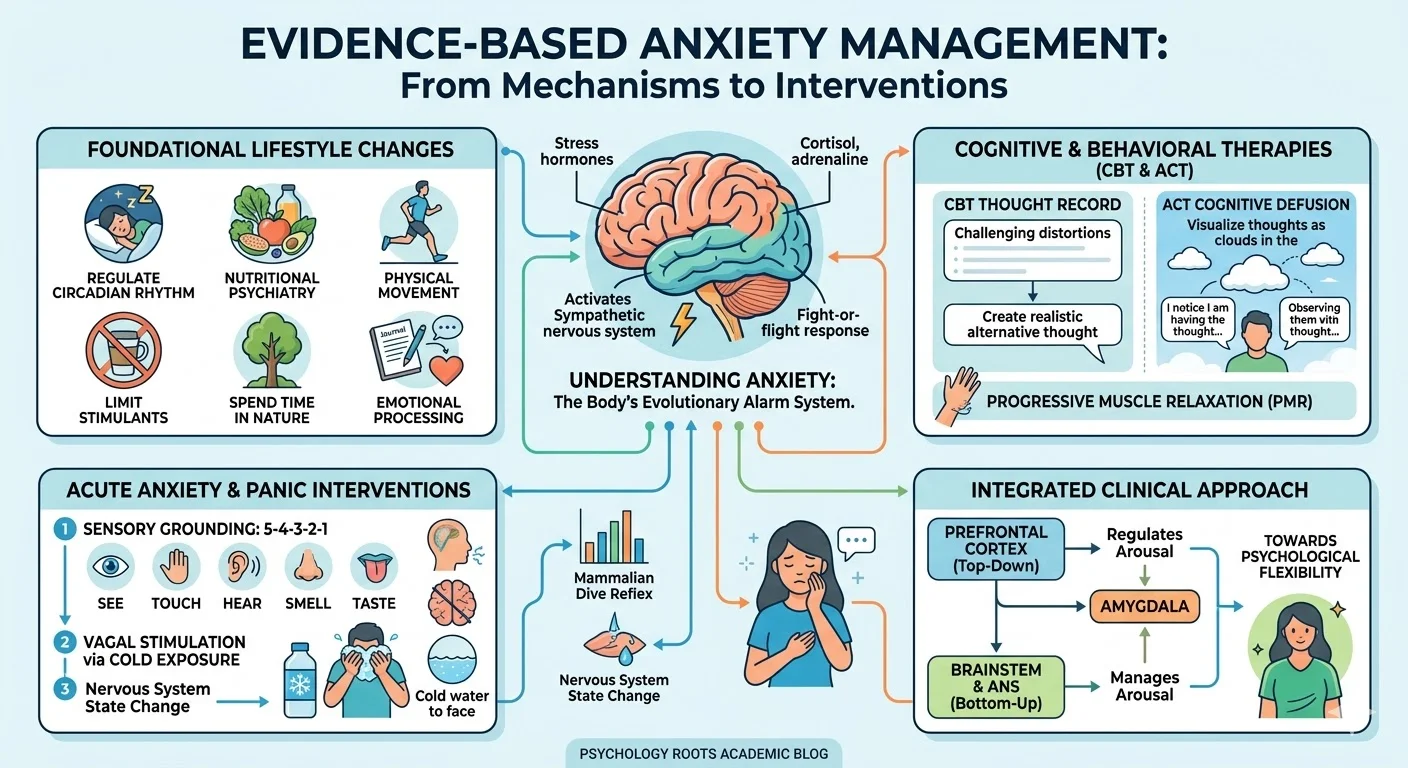
In my academic supervision and clinical practice over the last decade, I frequently observe that patients conceptualize anxiety as a purely psychological or abstract affliction. However, as outlined in the foundational framework provided by mental health professionals Micheline Maalouf and Nadia Addesi, anxiety is fundamentally the body’s natural evolutionary response to stress. It is a biological mechanism designed for survival, engineered to identify and respond to potential environmental threats.
We all experience this baseline arousal, but when this biological alarm system misfires or becomes chronically activated, it transitions into a clinical anxiety disorder. This article deconstructs the neurobiological underpinnings of anxiety and examines evidence-based interventions suitable for both acute symptom management and long-term psychological flexibility.
The Neurobiology of Anxiety
Anxiety originates in the brain but manifests physically through the immediate activation of the sympathetic nervous system. Upon perceiving a threat, the brain triggers a neuroendocrine cascade, specifically releasing the stress hormones cortisol and adrenaline into the bloodstream. This prepares the body for a fight-or-flight response.
Cognitively, this state is characterized by excessive worrying, racing thoughts, and intrusive ideation that patients often find shameful and difficult to control. Physiologically, acute anxiety or panic attacks present with severe somatic symptoms. These include hyperventilation, a racing heart, nausea, body chills, shaking, numbness, and dizziness. Prolonged exposure to this elevated physiological state can lead to chronic somatic issues, including persistent stomach pains, headaches, neck and jaw tension, agitation, and profound fatigue.
Foundational Behavioral Interventions
Before introducing complex psychotherapeutic techniques, clinicians must address foundational lifestyle factors that modulate the autonomic nervous system. Dysregulation in daily habits directly signals perceived threats to the brain, precipitating anxiety responses.
- Circadian Regulation: Establishing a consistent sleep schedule with six to eight hours of rest is critical for hormone regulation, daily cognitive processing, and baseline stress reduction.
- Nutritional Psychiatry: Consuming well-balanced, nutritious meals prevents the physiological stress associated with nutrient depletion. Skipping meals mimics a physiological threat state.
- Psychomotor Regulation: Incorporating daily physical movement helps metabolize circulating stress hormones.
- Stimulant Reduction: Caffeine acts as a central nervous system stimulant that mimics the somatic symptoms of anxiety, such as an increased heart rate and tremors. Clinicians recommend limiting intake or switching to decaffeinated alternatives.
- Environmental Regulators: Spending time in nature and taking systematic, hourly breaks during work routines serve to passively downregulate nervous system arousal.
- Emotional Processing: Techniques such as expressive journaling provide a safe external space for cognitive processing. Furthermore, suppressing emotions typically exacerbates anxiety; patients must be encouraged to feel their emotions without judgment. Finally, actively engaging socially fosters connection and inherent feelings of safety.
Targeted Clinical Techniques for Acute and Chronic Anxiety
When acute anxiety or panic strikes, patients require actionable, structured protocols.
Sensory Grounding: The 5-4-3-2-1 Protocol
During a state of high anxiety, cognitive processes often detach from the present moment. The 5-4-3-2-1 technique forces cortical engagement through deliberate sensory processing, shifting focus away from internal amygdala distress. The protocol requires the patient to identify:
- Five things they can visually process.
- Four things they can physically touch.
- Three specific sounds they can hear.
- Two distinct scents they can smell.
- One thing they can taste.
Cognitive Restructuring: The CBT Thought Record
Cognitive Behavioral Therapy (CBT) utilizes the thought record to systematically challenge cognitive distortions. This intervention requires patients to document the anxiety-provoking situation and rate their emotional intensity on a percentage scale. Patients then objectively list facts that support their anxious thought, followed by facts that contradict it, ultimately arriving at a more realistic alternative thought. This process disrupts automatic negative thinking patterns.
Cognitive Defusion (Acceptance and Commitment Therapy)
Unlike CBT, which challenges the content of thoughts, Acceptance and Commitment Therapy (ACT) utilizes cognitive defusion to alter the patient’s relationship to their thoughts. The goal is to distance oneself from thoughts, viewing them as transient mental events rather than absolute facts. A common clinical exercise involves the patient stating, “I notice I am having the thought that…” before their anxious premise. Visualizing these thoughts as words written on passing clouds helps facilitate this psychological distancing.
Progressive Muscle Relaxation (PMR)
Anxiety is held physically within the musculoskeletal system. Progressive Muscle Relaxation is an evidence-based mindfulness technique involving the deliberate tensing and subsequent relaxing of specific muscle groups. This practice not only induces physical relaxation but also enhances interoceptive awareness, allowing patients to recognize early somatic signals of stress before they escalate into panic.
Vagal Stimulation via Cold Exposure
For severe, acute panic attacks, rapid physiological intervention is required. Applying cold stimuli to the body rapidly alters the nervous system state. As noted by Maalouf and Addesi, holding ice tightly in the hands serves as a powerful grounding distraction. In clinical neurobiology, this mechanism is related to the mammalian dive reflex. Exposing the face or hands to extreme cold stimulates the vagus and trigeminal nerves, rapidly inducing bradycardia and shifting the body out of sympathetic overdrive.
Critical Analysis: Bridging Theory to Practice
Effective anxiety management relies on a dual approach. Top-down processing therapies, such as CBT and ACT, equip the prefrontal cortex to regulate the amygdala by reframing or accepting cognitive narratives. Conversely, bottom-up interventions, such as PMR and cold exposure, directly target the physiological arousal of the brainstem and autonomic nervous system. A comprehensive clinical treatment plan must integrate both modalities to foster true psychological flexibility.
Conclusion
Anxiety is a highly manageable condition when approached with empirical rigor and structured intervention. By understanding the physiological basis of the stress response and employing targeted therapies, patients can transition from a state of chronic alarm to one of resilience and self-efficacy.
References
- American Psychological Association. (2020). Publication manual of the American Psychological Association (7th ed.). https://doi.org/10.1037/0000165-000
- Hayes, S. C., Strosahl, K. D., & Wilson, K. G. (2011). Acceptance and commitment therapy: The process and practice of mindful change (2nd ed.). Guilford Press.
- Maalouf, M., & Addesi, N. (n.d.). The ultimate anxiety guide: Anxious like you. Dive Thru.
- Porges, S. W. (2011). The polyvagal theory: Neurophysiological foundations of emotions, attachment, communication, and self-regulation. W. W. Norton & Company.
